Happy New Year Sublimation Stickers Review
As a designer who has spent years navigating the intersection of digital graphics and tangible craft products, I approach every new asset with a critical eye. When I first opened the file for Happy New Year Sublimation Stickers, my initial thought was about its versatility within the broader Crafts category. The design immediately projects a festive mood, characterized by bold shapes and a layout that feels ready for immediate application. However, as someone who regularly creates custom apparel and personalized gifts for small shop owners, I know that a pretty graphic on a screen does not always translate perfectly to a finished product. This review explores how this specific Graphics asset performs when moved from the digital realm into real-world embroidery and sublimation projects.
First Impressions: Mood and Visual Personality
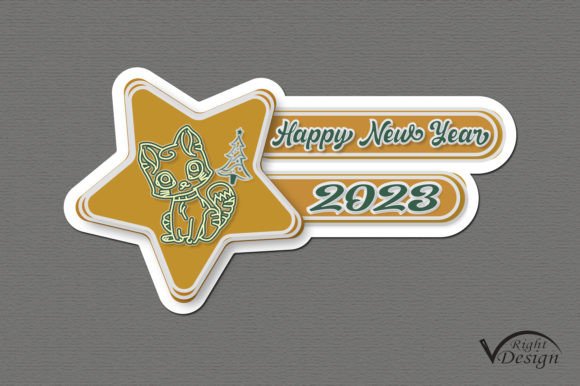
The visual personality of Happy New Year Sublimation Stickers is undeniably celebratory. The composition relies on clear lines and distinct elements that suggest it would work well as a standalone focal point. For an Etsy seller or a boutique owner looking to launch a holiday collection, the design offers a clean aesthetic that avoids the clutter often found in seasonal assets. The layout feels balanced, which is crucial when you are planning a sweatshirt embroidery or a tote bag design. If you imagine this design placed on a crisp white kitchen towel or a navy blue apron, the contrast potential is high. The simplicity of the shapes suggests that even if you were to adapt this for an embroidered patch, the details would likely remain legible without becoming muddy.
However, it is important to note that while the description highlights its use for stickers and mugs, the transition to textile applications requires careful consideration. The "Graphics" nature of the file means it is primarily a vector or raster image intended for printing or sublimation. To use this as a machine embroidery design, one would typically need to digitize it or ensure the file includes the necessary stitch data. Assuming we are discussing the visual intent for a handmade product, the clarity of the text and imagery is the strongest selling point. It communicates the holiday spirit instantly, which is exactly what customers look for when buying a personalized gift during the end-of-year rush.
Real-World Application: From File to Fabric
Let’s walk through a realistic scenario. Imagine you are preparing a limited run of custom hoodies for a local craft fair. You want to feature Happy New Year Sublimation Stickers on the front chest area. In a sublimation process, the vibrant colors of the design would transfer beautifully onto polyester blends, creating a durable, washable print that feels like part of the fabric. The design's boldness ensures it stands out against the texture of the garment. Alternatively, if you are converting this concept into a physical embroidery project, the design's structure supports a mix of satin stitch for the lettering and fill stitch for the decorative elements. This combination adds texture and depth, elevating the perceived value of the item.
For baby embroidery projects, such as a onesie or a nursery blanket, the cheerful theme fits perfectly. Parents love holiday-themed items for their infants, and the clean lines of this design ensure it won't overwhelm a small garment. Similarly, for a tote bag design, the placement could be centered or offset, depending on the bag's size. The key here is understanding that the design acts as a versatile asset. Whether you are producing commercial embroidery for a corporate client or crafting a single unique piece for a friend, the underlying graphic holds up well under scrutiny. It provides a professional look that can boost buyer engagement and reinforce brand consistency for a small business.
Navigating Challenges: Where Caution is Needed
Despite its strengths, there are scenarios where Happy New Year Sublimation Stickers requires extra attention. If you plan to use this on textured fabrics like denim or heavy canvas, the intricate details might get lost in the weave. Similarly, on stretchy fabrics, the integrity of the design can shift if the stabilizer isn't chosen correctly. For dark fabrics, the color palette of the original graphic may need adjustment to ensure visibility. A design that looks bright on a white background might appear dull on black unless you introduce a backing layer or adjust the thread colors significantly.
Small hoop sizes present another challenge. If you are trying to fit the entire design into a 4x4 inch hoop, some of the finer details might become too dense, leading to stitching issues. Dense stitch areas can cause puckering, especially on thin fabrics. Additionally, if the design includes tiny lettering, it is vital to test it first. Tiny text in embroidery often suffers from registration errors, making it hard to read. For curved surfaces like caps, the design must be adapted to follow the curve; otherwise, the flat perspective of the original graphic might distort awkwardly. Always remember that a design optimized for a mug might not naturally translate to a cap without significant modification.
Practical Designer Notes for Success
To ensure your project succeeds, start by testing the design on scrap fabric. This step is non-negotiable for any serious maker. Check the thread color contrast against your intended material. If you are using this for a commercial embroidery project, confirm the licensing terms explicitly. Many digital assets are sold for personal use only, so selling finished items without the proper license can lead to legal trouble. Verify whether the file is suitable for both personal and commercial projects before you invest time in production.
Review the stitch density carefully. High density can make a design look solid but risks tearing delicate fabrics. Use a proper stabilizer to support the weight of the stitches, especially for items that will undergo frequent washing, like tea towels or aprons. Inspect small details under magnification to ensure they will hold up after digitization. Test the design in black and white mockups to see if the silhouette works without color. Compare how it looks on light versus dark fabric backgrounds to determine if you need to add underlay stitches or change the color scheme.
Finally, consider the final presentation. Does this design elevate the handmade product? Does it convey professionalism? For a craft business, every detail contributes to customer trust. A well-executed Happy New Year Sublimation Stickers project can become a staple in your holiday inventory, driving sales and encouraging repeat business. By treating this asset with the respect it deserves—testing, adapting, and verifying—you turn a simple graphic into a high-quality, market-ready product that stands out in a crowded marketplace.